
Some trips give you photos. Others give you stories.
An Everest trek usually gives you both. You leave the busy roads behind, walk through mountain villages, cross high bridges, and slowly move into a world shaped by snow, stone, and thin air. By the time you reach Everest Base Camp, you have already changed in small ways.
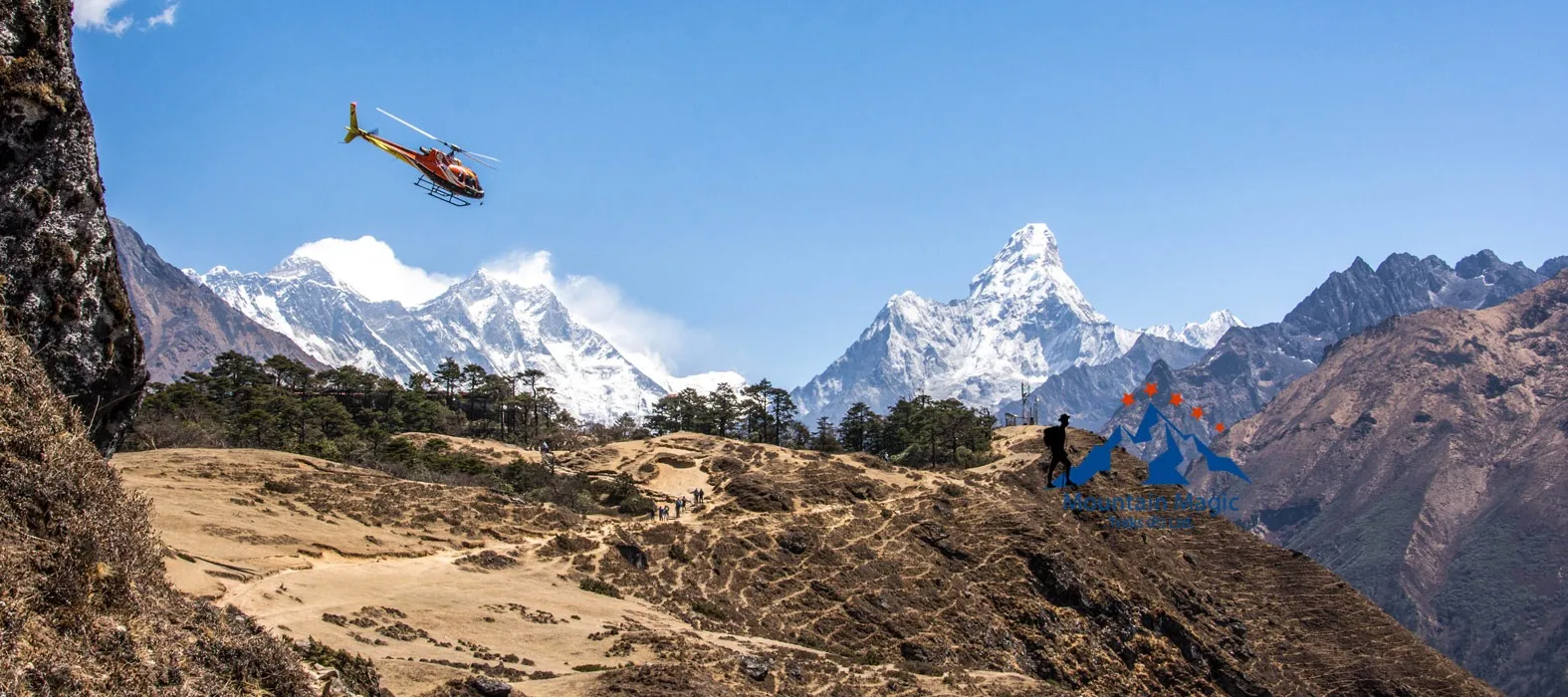
The Everest Base Camp Trek With Helicopter Return adds another interesting part to this journey. You make the long approach on foot, but you do not need to spend several more days walking the same route back. Instead, the return flight lets you finish the adventure from the air.
But the real value of this trek is not only the helicopter. It is what you learn while walking toward Everest.
The Mountain Teaches You to Slow Down
Modern life often feels rushed.
There is always another message, another meeting, or another task waiting. The Everest trail works differently. You cannot hurry the mountain.
You walk, rest, eat, and walk again.
Some days, a short distance can take much longer than expected. The trail may climb sharply or become rough under your feet. At higher elevations, even normal walking can require more effort.
The Everest Base Camp Trek With Helicopter Return gives you a chance to accept a slower rhythm.
At first, this may feel strange. After a few days, it starts to feel natural.
Small Progress Starts to Matter
At home, we often measure success with big results.
The mountains make you notice smaller wins.
You reached the next village. You finished another climb. You made it through a cold morning. You walked another hour when your legs wanted to stop.
These moments may sound simple, but they build confidence.
Every Day Has Its Own Challenge
No two trekking days feel exactly the same.
One day may be physically demanding. Another may test your patience because of cold weather or a long trail. Sometimes the hardest part is simply getting started in the morning.
That is part of the experience.
You learn to focus on the day in front of you instead of worrying about the entire route.
This mindset can be useful long after you return home.
You Start Paying Attention to Your Surroundings
When you spend hours walking without traffic, screens, and city noise, your attention changes.
You notice the river below the trail.
You hear the wind moving through the valley.
You see prayer flags tied across bridges and mountain paths.
You notice how the light changes on the peaks during the day.
The Everest Base Camp Trek With Helicopter Return is therefore not just about covering distance. It gives you time to actually observe where you are.
That can be difficult on a normal vacation where you move quickly from one attraction to another.
The People Along the Way Matter
The mountains are impressive, but the people make the journey feel personal.
You meet guides, porters, lodge owners, cooks, and other trekkers. Everyone has a different reason for being there.
Some travelers have dreamed about Everest for years. Others simply wanted to try something completely different.
Conversations often begin with simple questions.
Where are you from?
How far are you walking today?
How many days have you been on the trail?
A short conversation can sometimes become a good memory.
You Understand the Value of Good Preparation
The mountains are not the place to rely on luck.
Good shoes matter. Warm clothing matters. Water matters. Rest matters.
Even small mistakes can become uncomfortable when you are far from a road or store.
Before starting an Everest Base Camp Trek With Helicopter Return, travelers should think carefully about fitness, clothing, personal items, and altitude preparation.
You do not need to carry everything you own.
You do need to carry what you will actually use.
Comfort Is More Important Than Looking Perfect
Trekking is not a fashion show.
A jacket that keeps you warm is more useful than one that simply looks good. Comfortable socks can matter more than expensive accessories. A reliable backpack is better than one that looks impressive but hurts your shoulders.
Choose practical gear.
The goal is to enjoy the trail, not spend the whole trip fixing problems caused by poor equipment.
The Final Approach Feels Different
As you get closer to Base Camp, the feeling changes.
You know the goal is near, but the trail still demands effort.
There is no elevator waiting at the top. You still have to walk.
That is why reaching Base Camp can feel so satisfying.
The Everest Base Camp Trek With Helicopter Return keeps this part of the experience intact. You earn the destination through your own steps before the helicopter becomes part of the journey.
Seeing the Trail From Above
The return flight changes your view completely.
From the ground, a mountain trail can seem endless. From a helicopter, the same path may look like a tiny line running through a huge landscape.
You may recognize villages, valleys, bridges, or sections of trail that you passed earlier.
The experience creates an interesting contrast.
You spent days moving slowly through the Himalayas. Now, in a short flight, you can see how all those places connect.
For many travelers, this becomes a highlight of the Everest Base Camp Trek With Helicopter Return.
Why the Faster Return Can Be Useful
Walking back is a valid choice, and many trekkers enjoy it.
But it also requires more time.
A helicopter return can be helpful when your vacation schedule is limited. It can also reduce the amount of repeated walking after you have already completed the main trekking goal.
That extra time can be used for rest, sightseeing, or simply having a less stressful travel schedule.
The important thing is to choose the option that matches your own priorities.
Weather Still Has the Final Say
A helicopter cannot control mountain weather.
Visibility, wind, and other conditions can affect flights. Delays are possible, so travelers should avoid planning their schedule with no extra time.
Keep important travel documents and essential items close by.
More importantly, stay flexible.
In the Himalayas, patience is not just a nice quality to have. It is part of smart travel.
FAQs
Is the helicopter return physically easier?
The trekking portion still requires good fitness. The helicopter mainly removes the need to walk the return route.
Will I still experience the local villages?
Yes. The journey to Base Camp takes you through mountain communities, where you can experience local food, lodges, trails, and daily life.
Is the return flight guaranteed?
No. Mountain weather can affect helicopter operations. Travelers should allow flexibility for possible delays.
Why choose a helicopter after reaching Base Camp?
The main reasons are to save time, reduce additional walking, and enjoy an aerial view of the Himalayan landscape.
Conclusion
The Everest Base Camp Trek With Helicopter Return offers more than a convenient way to finish a trek.
The real journey happens on the trail. It teaches patience, makes small achievements feel important, and gives you time to notice details that busy life often hides.
Then comes the helicopter.
After spending days walking through the mountains, you rise above the same valleys and trails and see the entire journey from a new angle.
That is what makes this experience special. You do not simply visit Everest. You move through its landscape, learn from the journey, and finally watch it disappear beneath you as you head home.
